
Just because summer is over doesn’t mean it’s time to put your walking boots away. November and the months that follow can be a lovely time to explore the Cairngorms and surrounding countryside. The mornings might be frosty, the days are shorter and the weather can be unpredictable, but there are still plenty of opportunities to get outside and enjoy a good walk. Winter walking in the Cairngorms doesn’t need to be big mountain days either.
You don’t need to climb a Munro or head high into the mountains to appreciate the Scottish Highlands in winter. Woodland paths, lochside trails and lower-level walks offer plenty of variety, often with fewer people sharing the paths. Every year is slightly different but the one thing you can rely on is that when the sun is shining at this time of year, even if it’s chilly; it’s best to grab the opportunity with both hands and head outside.
If you’re planning a stay at Fraoch Lodge over the coming months, here are a few practical things worth thinking about before heading out.
1. Dress in layers
One of the challenges of walking in the Highlands during the colder months is that conditions can change quite considerably during the day. You might leave your accommodation on a frosty morning, warm up quickly once you’re walking and then find yourself needing an extra layer when you stop for lunch.
Wearing several layers makes it easier to adjust to changing conditions.
A good starting point is:
- A comfortable base layer: Something that moves moisture away from your skin is preferable to cotton, which can become cold and uncomfortable when damp. Personally I’d recommend merino wool, but it’s not everyone’s cup of tea as some people find wool itchy no matter how high the quality. Silk is also good and you may find that one of the modern “string vests” (popular in Scandinavia) is an option which works for you.
- A warm middle layer: A fleece or lightweight insulated jacket provides warmth without adding too much bulk. Avoid down if you can though as it loses so much of its thermal potential if it gets damp.
- A waterproof outer layer: Highland weather can change quickly, so having a waterproof jacket in your daypack is sensible even when the morning looks promising. For this time of year and generally Scottish conditions, we recommend Nikwax analogue jackets like, Paramo. Gortex is cheaper but can become delaminated more easily and then loses its waterproof capabilities.
You may also want waterproof trousers & gaiters, particularly if you’re walking through wet grass, muddy woodland or exposed areas.
The key is to be able to add or remove layers as needed. You don’t want to start walking already too warm, but equally you don’t want to become chilled when you stop to admire the view.

2. Choose your footwear carefully
Highland paths can be muddy, wet and slippery during November and throughout the winter. Even relatively straightforward woodland walks can involve puddles, soft ground and uneven surfaces.
Waterproof walking shoes or boots are usually a better choice than ordinary trainers. Which you choose will depend on the type of walking you intend to do and what you find comfortable.
For lower-level woodland and lochside walks, a good pair of waterproof walking shoes may be perfectly adequate. If you’re planning longer walks over rougher or more uneven terrain, walking boots with ankle support may be more suitable.
A few other things worth remembering:
- Wear walking socks that you know are comfortable.
- Make sure your footwear has a good grip.
- Take a spare pair of socks in the car or your daypack.
- Avoid setting off in brand-new boots without wearing them in first.
There is nothing quite as uncomfortable as spending the rest of the day with cold, wet feet! Waterproof socks may also be a top tip for particularly wet conditions. Andy has been known to use waterproof socks all day in the height of winter.
3. Don’t forget the small things
It’s often the little things that make the difference between an enjoyable winter walk and an uncomfortable one.
Even if you’re only planning a couple of hours on a familiar path, it’s worth carrying a few essentials.
A useful winter walking checklist:
- A warm hat and gloves & spares. It’s also worth considering light weight liner gloves inside your thicker gloves as then you’ll be able to keep your hands covered even if you have to take off the larger gloves to manipulate your zip or tie your laces.
- Neck gaiter/snood – a thermal one if you have it to cover your lower face. They usually work better than a scarf.
- A waterproof jacket and an extra warm layer.
- A headtorch, even if you expect to be back well before dark.
- A flask of something hot.
- Snacks to keep your energy levels up.
- Water to drink.
- A fully charged mobile phone.
- Back up battery for your phone as many phones lose battery power more quickly in the cold
- Waterproof lining for your backpack
- A small first-aid kit.
You might not need everything on every walk, but it’s better to have an extra layer or a headtorch and not use them than to find yourself wishing you’d brought them.
If you tend to suffer from cold hands, it’s particularly worth thinking about your gloves before setting off. Keeping your hands warm is much easier than trying to warm them up once they’ve become cold.

4. Make the most of the shorter days
One of the biggest differences between walking in summer and walking in November or December is the amount of daylight available.
The days shorten quite quickly as autumn progresses, with sunset arriving surprisingly early. This doesn’t mean you need to abandon longer walks, but it does mean planning becomes more important. Worth considering driving to the start of your walk in the dark so you can see the sunrise and have maximum daylight for your activity.
Before setting out:
- Check sunrise and sunset times.
- Allow enough time to complete your walk in daylight.
- Remember that muddy paths and wet conditions can make progress slower.
- Carry a headtorch in case your walk takes longer than expected.
- Let someone know where you’re going if you’re walking somewhere remote.
It’s also worth checking the weather forecast before you leave. Conditions in the Scottish hills can change quickly, and the Met Office mountain weather forecast is particularly useful if you’re considering walking at higher elevations.
Even if you’re planning to stay on lower ground, don’t assume that a familiar route will always be straightforward in winter conditions.
5. Choose your walk to suit the conditions
One of the advantages of staying in the Cairngorms is the variety of walking available without having to venture onto the higher mountains.
If the summits are covered in snow, the wind is strong or the weather looks particularly unsettled, there are plenty of alternatives.
Woodland walks
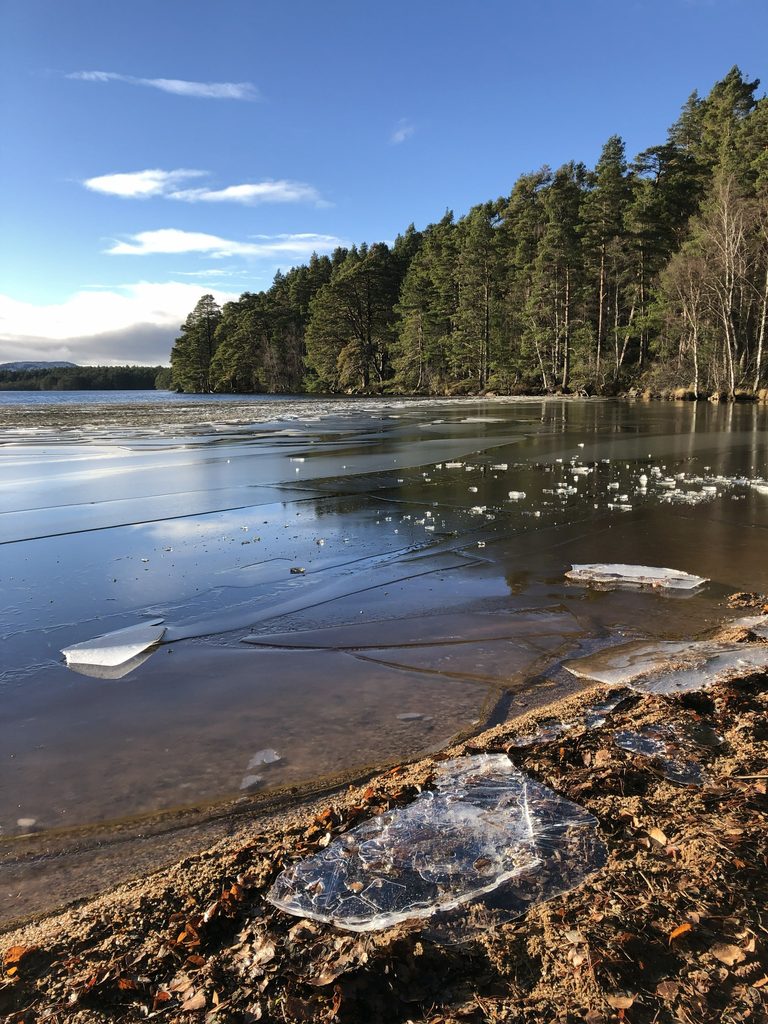
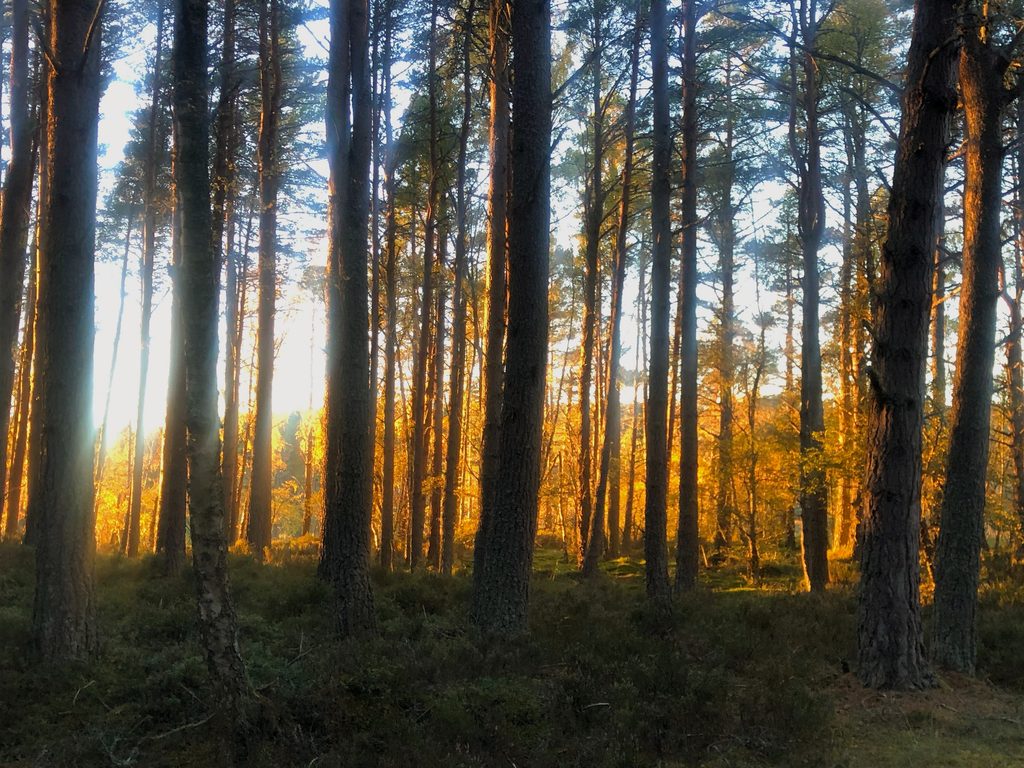
The forests around Badenoch and Strathspey offer some excellent walking throughout the colder months. Anagach Woods near Grantown-on-Spey has an extensive network of paths, while the woodland around Loch an Eilein provides a lovely setting for a walk among the trees, with views across the water to the historic castle.
Lochside walks
Loch Garten and Loch Mallachie offer quieter walking through the Abernethy Forest, with opportunities to enjoy the changing woodland and look out for wildlife. Around Loch Insh, there are also opportunities to enjoy the landscape from a different perspective, with the surrounding hills providing a backdrop to the water.
Glenmore and the Green Lochan
The woodland paths around Glenmore are particularly attractive in autumn and winter. A walk to the Green Lochan is a good option for a shorter outing, with the dark green water providing a striking contrast to the surrounding trees.
These are just a few possibilities. There are plenty of other paths and tracks throughout the area, and you can often adapt the length of your walk to suit the weather, daylight and how energetic you’re feeling.
It’s worth remembering that a shorter walk isn’t necessarily a less rewarding one. A frosty morning in the woods, a quiet stretch of lochside or a chance encounter with a red squirrel can make for a memorable day outdoors.
6. Check the forecast, but be prepared to change your plans
It’s always worth checking the weather before heading out, particularly during the colder months.
The Met Office provides general forecasts as well as specialist mountain forecasts. These can help you understand what conditions to expect, although forecasts are not always exact, particularly in mountainous areas.
Think about more than just the temperature. Wind, rain, visibility and the possibility of ice can all affect how enjoyable and straightforward a walk will be.
If the weather isn’t suitable for your original plan, be prepared to choose something different. There is little point struggling up an exposed hillside when a sheltered woodland walk might offer a much more enjoyable day.
And if conditions are particularly poor, there’s nothing wrong with postponing your walk altogether.
7. Enjoy coming back to somewhere warm
One of the pleasures of walking during the colder months is returning somewhere warm afterwards.
After a few hours outside, there’s something particularly satisfying about taking off your wet walking clothes, having a hot shower and settling down with something warming to eat.
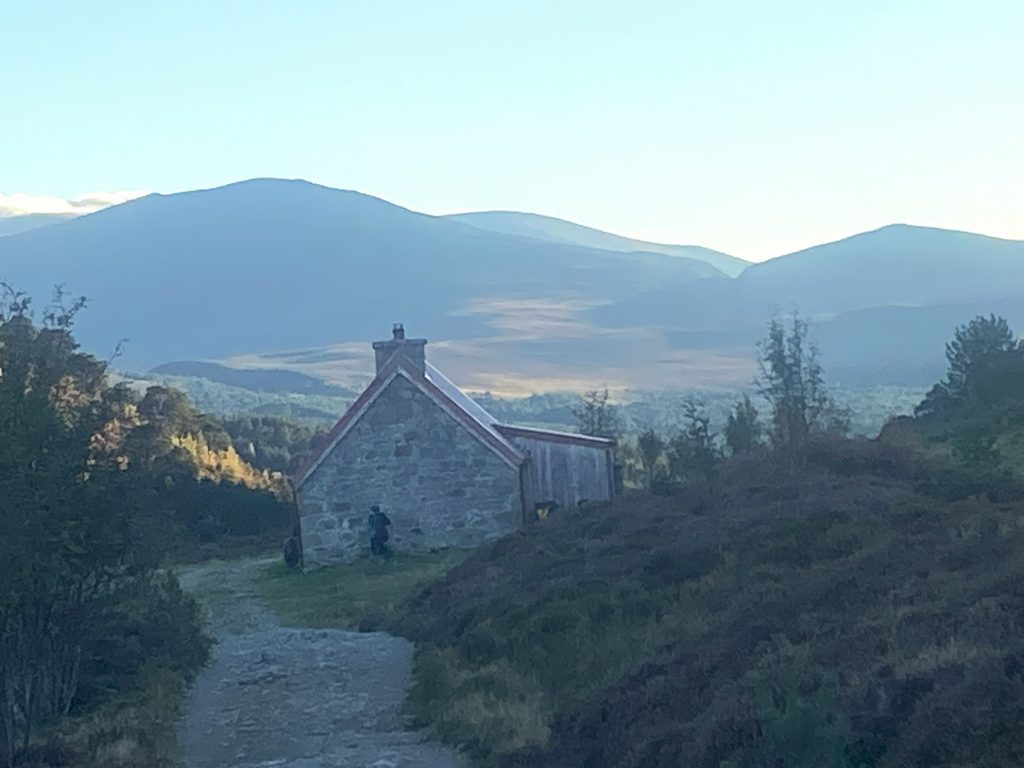
At Fraoch Lodge, we’re well placed for exploring the woodland, lochs and hills of Badenoch and Strathspey. You can spend the day outdoors and return to a comfortable base, without needing to travel long distances to find somewhere to walk.
Winter walking doesn’t have to mean tackling challenging mountains or investing in a whole new collection of specialist equipment. With sensible clothing, a little planning and a willingness to choose your route according to the conditions, there are plenty of ways to enjoy the Cairngorms throughout the colder months.
So don’t put those walking boots away just yet.
Walking in the quieter times over autumn and winter can produce some surprises. This video was taken during a visit to Uath Lochans. The noises we were able to produce thanks to the ice were nothing short of amazing.